Victor Vasarely, often hailed as the father of Op art, revolutionized the art world with his mesmerizing geometric compositions and optical illusions. Born in Hungary in 1906, Vasarely’s groundbreaking work transcends traditional artistic boundaries, seamlessly blending elements of science, mathematics, and visual perception. His bold use of color, precise geometric forms, and meticulous attention to detail create artworks that pulsate with energy and vitality, captivating viewers and challenging their perceptions of space and dimension. Beyond his technical mastery, Vasarely’s artistic vision was deeply rooted in a desire to democratize art and make it accessible to all, believing that art should not be confined to galleries but should instead permeate everyday life. His legacy continues to inspire generations of artists and enthusiasts alike, leaving an indelible mark on the world of modern art.
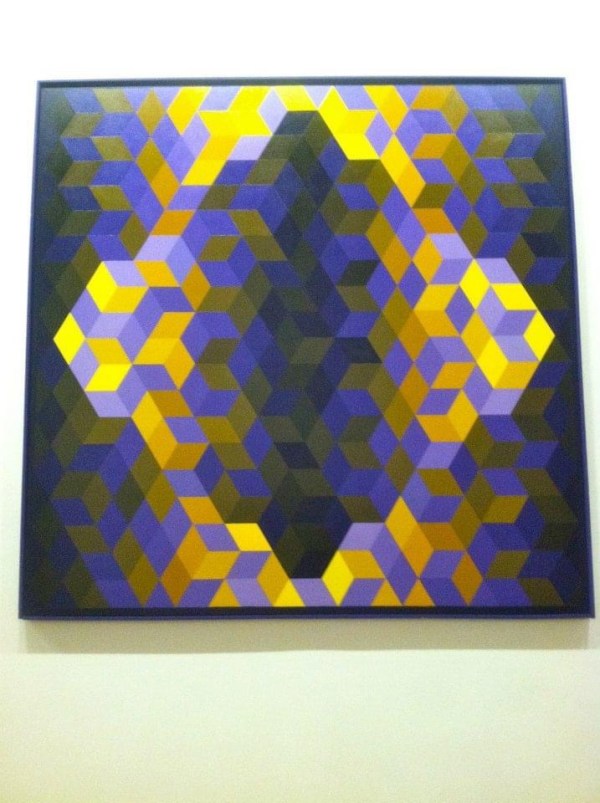
Above, a Victor Vasarely at the George Pompidou Centre in Paris. He is one of the artists who, ahead of his time, saw things we are beginning to see.
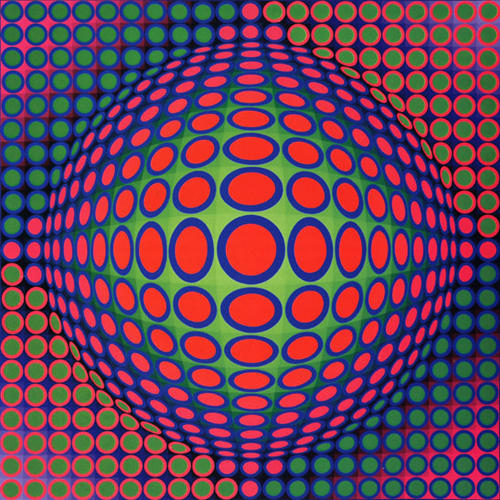
Below, Vasarely’s “Vega” painted in 1968.

 Lupitanews